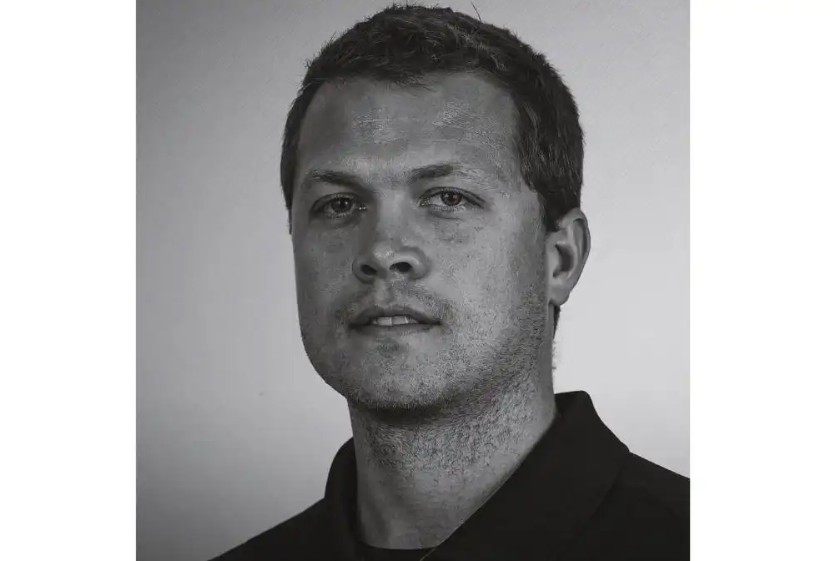
Former NC State swimmer and assistant coach Jack Roney died in a tragic accident while practicing underwater breathing exercises, according to an autopsy report obtained by multiple outlets.
Roney, 39, drowned on July 5 after holding his breath underwater for extended periods of time.
The North Carolina Chief Medical Examiner’s Office determined his death was an accidental drowning, according to the Charlotte Observer and News & Observer.
Roney’s father, John, said his son died from what is known as “shallow water blackout,” also called hypoxic blackout.
“We want it known that holding one’s breath underwater for extended periods is dangerous,” John told the News & Observer. “We’d like to prevent this from happening to someone else. Jack would too.”
The National Library of Medicine describes shallow water blackout as a loss of consciousness caused by a lack of oxygen to the brain during breath-hold submersion, often after hyperventilation.
According to the Charlotte Observer, Roney’s autopsy noted that he was in a “good athletic state” at the time of his death.
The report also said there were no concerns about suicide, substance abuse or foul play, and no trauma was found.
Roney’s wife of 15 years, Maresa, reportedly found him unconscious in the pool after briefly stepping away to take a phone call.
Emergency crews arrived at about 7:36 p.m. and tried to revive him with CPR.
Paramedics continued resuscitation efforts until about 8:19 p.m., when Roney was taken to the hospital.
Investigators later reviewed video footage from before the drowning.
According to reports, the footage showed Roney remaining underwater for about two minutes and 14 seconds. He then went underwater again and did not come back up.
Roney was pronounced dead at 8:53 p.m. on July 5.
The loss devastated the NC State swimming community.
Roney had been a standout swimmer for the school and once held NC State’s record in the 200-yard breaststroke from 2008 to 2011.
He later returned to the program as an assistant coach.
Roney and Maresa, who was also a swimmer, met at NC State and went on to build a life together.
The couple had five children.
His family is now hoping his death serves as a warning about the dangers of prolonged underwater breath-holding, even for experienced and highly trained swimmers.